Tissue Repair Peptides

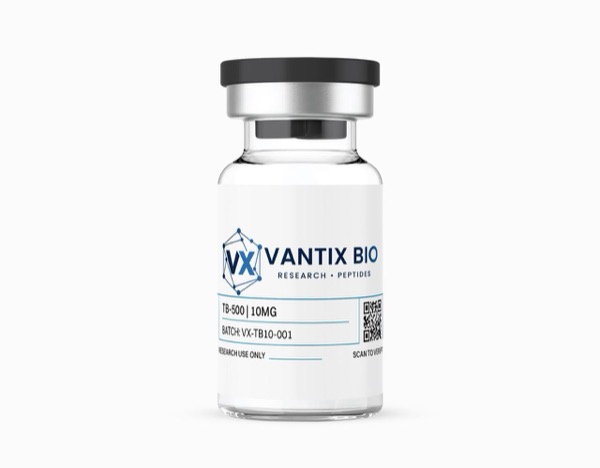
TB-500 10mg

$45
COA Verified
Thymosin Beta-4 fragment—the master regulator of actin polymerization and cell migration, driving structural tissue regeneration from injury to restoration.
TB-500 10mg - Vantix Bio
FormLyophilized Powder
Quantity10mg
Purity≥98% (HPLC Verified)
SequenceAc-SDKP (active fragment: Tβ4 17-23)
CAS Number77591-33-4
Molecular Weight4963.5 g/mol
Storage-20°C (lyophilized) / 2-8°C (reconstituted)
Third-Party Tested
Next Day Ship
Free Shipping $150+
Quantity:
1
Verify COA

What is TB-500?

TB-500, the synthetic form of the active region of Thymosin Beta-4 (Tβ4), is a naturally occurring 43-amino acid peptide that plays a central role in tissue repair, cell migration, and wound healing. Originally isolated from thymic tissue and subsequently found in virtually every mammalian cell type, Thymosin Beta-4 is one of the most abundant intracellular peptides in the human body—a testament to its fundamental biological importance. TB-500 contains the active domain responsible for Tβ4's remarkable tissue repair properties.

The peptide's primary function centers on regulation of actin polymerization—the fundamental process that enables cells to move, change shape, and organize their internal structure. By sequestering G-actin monomers, TB-500 maintains a pool of readily available actin building blocks that can be rapidly polymerized when cells need to migrate into wound sites or reorganize their cytoskeleton during tissue remodeling. This makes TB-500 uniquely positioned to promote the cellular migration that is the rate-limiting step in most tissue repair processes.

Beyond actin regulation, TB-500 promotes angiogenesis, reduces inflammatory cytokine production, upregulates matrix metalloproteinases for extracellular matrix remodeling, and enhances differentiation of endothelial progenitor cells and stem cells. These multi-faceted repair properties have made it one of the most studied peptides in regenerative medicine, with research applications spanning cardiac, dermal, neural, and musculoskeletal tissue repair.

Mechanism of Action

TB-500 functions primarily through regulation of actin polymerization dynamics. As a G-actin sequestering peptide, it binds monomeric actin (G-actin) with high affinity, preventing spontaneous polymerization while maintaining a readily mobilizable pool of actin subunits. When cells receive migration signals, TB-500 releases sequestered G-actin, enabling rapid filamentous actin (F-actin) assembly at the leading edge of migrating cells. This controlled actin dynamics is essential for cell locomotion—the process by which repair cells physically move into injury sites.

The peptide upregulates matrix metalloproteinases (MMPs), particularly MMP-2 and MMP-9, facilitating controlled extracellular matrix remodeling that clears damaged tissue while laying the foundation for organized regeneration. TB-500 also promotes differentiation of endothelial progenitor cells, supporting new blood vessel formation (angiogenesis) critical for delivering oxygen and nutrients to healing tissue. In keratinocytes and dermal fibroblasts, TB-500 enhances migration rates by 200-300%, dramatically accelerating wound closure.

Additional mechanisms include upregulation of integrin-linked kinase (ILK)—a key regulator of cell-matrix interactions—activation of the Akt survival pathway to protect migrating cells from apoptosis, and suppression of inflammatory mediators including NF-κB-dependent cytokines. TB-500 also promotes cardiac progenitor cell activation and differentiation, explaining its observed cardioprotective effects in ischemia models.

Cardiac and Neural Regeneration

TB-500's effects on cardiac tissue regeneration represent some of the most compelling findings in the field. Following myocardial ischemia, TB-500 promotes activation of epicardium-derived progenitor cells (EPDCs), which migrate into the injured myocardium and differentiate into cardiomyocytes and vascular smooth muscle cells. This regenerative response—virtually absent without TB-500 intervention—suggests the adult heart retains latent regenerative capacity that can be unlocked through appropriate signaling. The peptide also reduces post-ischemic inflammation through suppression of TNF-α and IL-1β secretion from cardiac macrophages, creating a microenvironment more conducive to organized repair rather than fibrotic scarring.

In the nervous system, TB-500 promotes oligodendrocyte progenitor cell migration and differentiation, accelerating remyelination after demyelinating injuries. The peptide's actin-regulating properties are particularly relevant in neurons, where cytoskeletal dynamics drive axonal growth cone extension during regeneration. TB-500 enhances neurite outgrowth by 180% in dorsal root ganglion explant cultures—an effect mediated through ILK-dependent GSK3β inhibition that promotes microtubule stabilization in growing axons. These neural regeneration properties, combined with anti-inflammatory effects in the CNS microenvironment, make TB-500 valuable for neurotrauma and neurodegenerative disease research models.

Musculoskeletal applications extend beyond simple wound healing. In tendon injury models, TB-500 promotes tenocyte migration and organized collagen deposition, resulting in repaired tissue with biomechanical properties closer to native tendon than the disorganized scar tissue typically produced by natural healing. The peptide also enhances satellite cell activation in skeletal muscle, accelerating myofiber regeneration after both mechanical and chemical injuries.

Key Research Findings

Research Applications

Published Research Protocols

Published protocols describe reconstitution with bacteriostatic water using standard aseptic technique. TB-500 dissolves readily in aqueous solution. Published in vivo protocols typically use 2-6 mg/kg in rodent models, administered subcutaneously. In vitro concentrations of 50-500 nM are standard for migration and proliferation assays.

Storage & Handling

Store lyophilized at -20°C protected from moisture. Published protocols describe reconstitution with bacteriostatic water; stable at 2-8°C for 30 days. TB-500 is chemically compatible with BPC-157 in the same solution for combination studies. Published handling protocols advise against repeated freeze-thaw cycles.

Dermal and Ophthalmic Applications

TB-500's effects on skin wound healing have been extensively characterized. The peptide accelerates all phases of dermal repair: it promotes keratinocyte migration across the wound bed (re-epithelialization), enhances fibroblast infiltration and collagen deposition in the wound matrix, and promotes organized neovascularization to support the metabolic demands of healing tissue. Critically, TB-500-treated wounds exhibit less scar formation than controls, with more organized collagen fiber alignment resembling native dermis rather than the parallel fiber bundles characteristic of scar tissue.

In ophthalmic research, TB-500 demonstrates remarkable effects on corneal wound healing. The peptide reduces corneal opacity after injury by promoting organized stromal remodeling, suppressing myofibroblast differentiation (the cell type responsible for corneal scarring), and enhancing epithelial cell migration to restore the corneal surface. These effects make TB-500 a valuable research tool for studying corneal repair mechanisms and developing strategies to reduce post-surgical corneal haze.

The peptide's stem cell mobilization properties extend across multiple tissue-specific stem cell populations. In addition to cardiac progenitor cells and satellite cells (muscle), TB-500 activates hair follicle stem cells, endothelial progenitor cells, and mesenchymal stem cells. This broad stem cell activation, combined with the anti-inflammatory and matrix-remodeling effects, creates a comprehensive regenerative signal that recruits, protects, and directs multiple progenitor cell populations toward organized tissue repair.

Research Protocol Considerations

When designing TB-500 research protocols, investigators should consider the peptide's pharmacokinetic profile. TB-500 distributes rapidly after subcutaneous administration, with peak tissue concentrations reached within 2-4 hours. The peptide demonstrates preferential accumulation at sites of tissue injury—a phenomenon attributed to enhanced vascular permeability at injury sites and the increased density of actin-binding sites in damaged tissue undergoing active repair. This injury-targeted distribution means that TB-500 concentrations at the site of interest may significantly exceed systemic levels, an important consideration for dose-response characterization.

For chronic study designs, TB-500 demonstrates sustained efficacy without significant tachyphylaxis over 4-8 week dosing periods. Unlike growth factors that can induce receptor downregulation with prolonged exposure, TB-500's mechanism—actin sequestration—does not depend on receptor-mediated signaling and therefore is not subject to classical desensitization. This mechanistic distinction supports extended dosing protocols without the need for drug holidays or dose escalation, simplifying experimental design for longitudinal tissue repair studies.

Frequently Asked Questions

How does TB-500 complement BPC-157?

TB-500 and BPC-157 address different phases of tissue repair. BPC-157 provides cytoprotection and drives angiogenesis (protecting existing tissue and building new blood vessels), while TB-500 promotes cell migration and extracellular matrix remodeling (moving repair cells to injury sites and reorganizing tissue structure). Together they cover the complete repair cascade.

What is the difference between TB-500 and Thymosin Beta-4?

TB-500 is a synthetic peptide containing the active region of the full-length 43-amino acid Thymosin Beta-4 protein. It retains the actin-binding domain and tissue repair properties while being more cost-effective to synthesize for research applications.

What reconstitution methods are described in published literature for TB-500?

Add bacteriostatic water slowly down the vial wall. TB-500 dissolves readily within 1-2 minutes. Gentle swirling is acceptable if needed. Standard reconstitution uses 1-2 mL per vial.

What purity testing is performed?

Dual-layer verification: manufacturer HPLC (≥98%) plus independent third-party testing. Full COAs available through our verification portal.

Can TB-500 be combined with other peptides?

TB-500 is chemically stable with most research peptides at physiological pH. It is commonly co-reconstituted with BPC-157 for complementary tissue repair studies without degradation or interaction issues.

What is the reconstituted stability?

Maintains ≥95% potency for 30 days at 2-8°C. For extended studies, aliquoting into single-use volumes upon reconstitution is recommended.

References

  1. Goldstein AL, et al. "Thymosin β4: a multi-functional regenerative peptide." Expert Opin Biol Ther. 2012;12(1):37-51. PMID: 22074294
  2. Bock-Marquette I, et al. "Thymosin β4 activates integrin-linked kinase and promotes cardiac cell migration, survival and cardiac repair." Nature. 2004;432(7016):466-472. PMID: 15565145
  3. Philp D, et al. "Thymosin β4 promotes angiogenesis, wound healing, and hair follicle development." Mech Ageing Dev. 2004;125(2):113-115. PMID: 15037012
  4. Sosne G, et al. "Thymosin Beta 4 and the Eye." Ann N Y Acad Sci. 2016;1269(1):92-98. PMID: 22577184
  5. Spurney CF, et al. "Dystrophin-deficient cardiomyopathy in mouse." Neuromuscul Disord. 2008;18(5):371-381. PMID: 18440230
FOR RESEARCH PURPOSES ONLY. This product is intended exclusively for in vitro laboratory research and is not for human consumption, diagnostic use, or therapeutic applications. By purchasing, you certify you are a qualified researcher.
TB-500 10mg
$35